They can look similar in a photo, but a purpose-built portable cabin and a converted shipping container are very different products underneath — in how they're made, how they handle British weather, what they weigh, and what they cost to actually make usable. Here's an honest comparison to help you pick the right one.
Key takeaway
A portable cabin is designed from day one as a workspace — insulated, wired and finished at the factory. A converted container starts life as a steel shipping box and has workspace features cut and fitted into it afterwards. For staffed, public-facing positions like kiosks, gatehouses and pay points, the purpose-built cabin is usually warmer, lighter, easier to move and cheaper. For unattended secure storage on a rough site, the container's brute strength wins.
Two products that solve the same problem differently
Both products answer the same brief: "I need a weatherproof space on my site, fast, without constructing a building." The difference is where they start from.
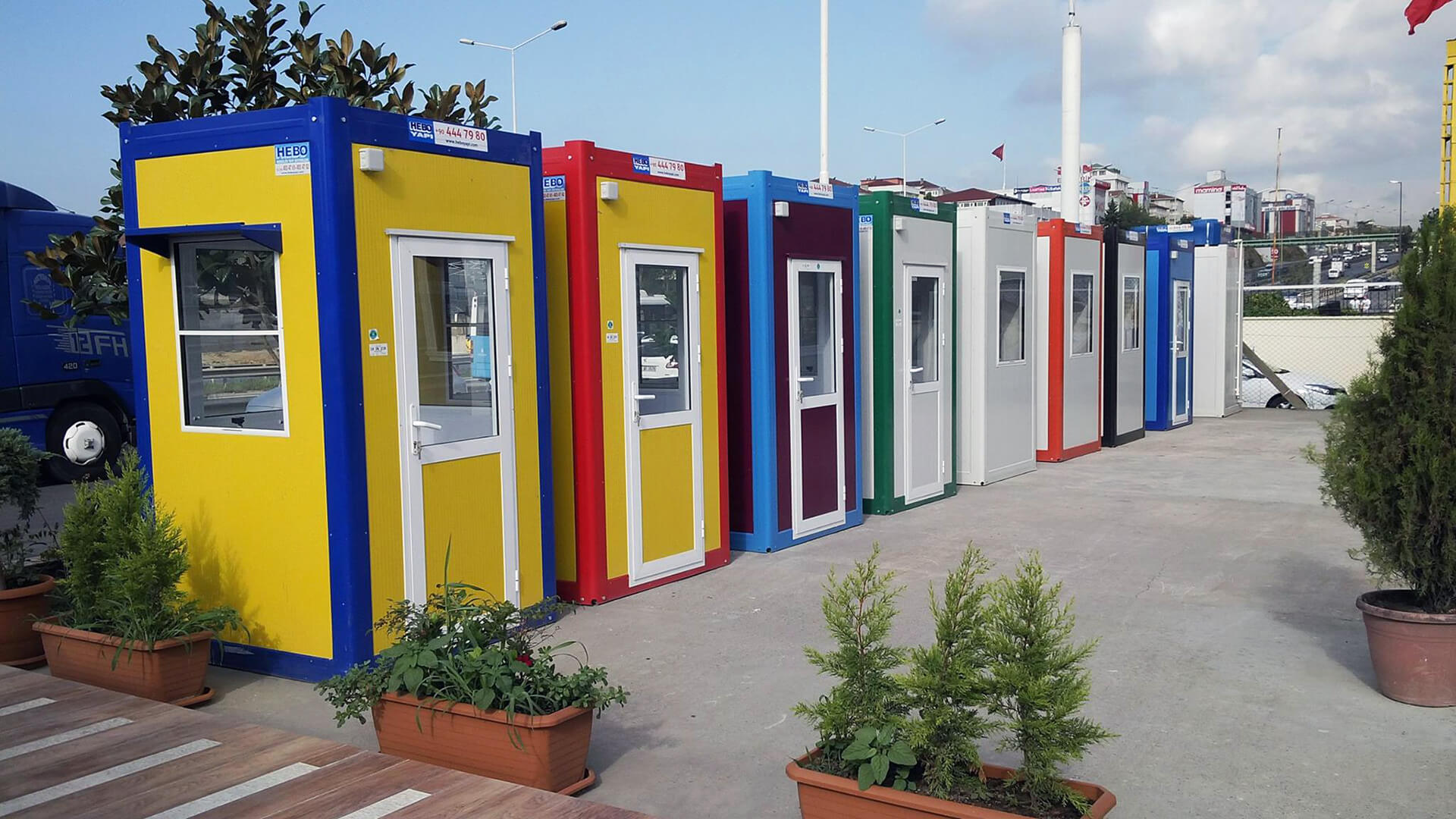
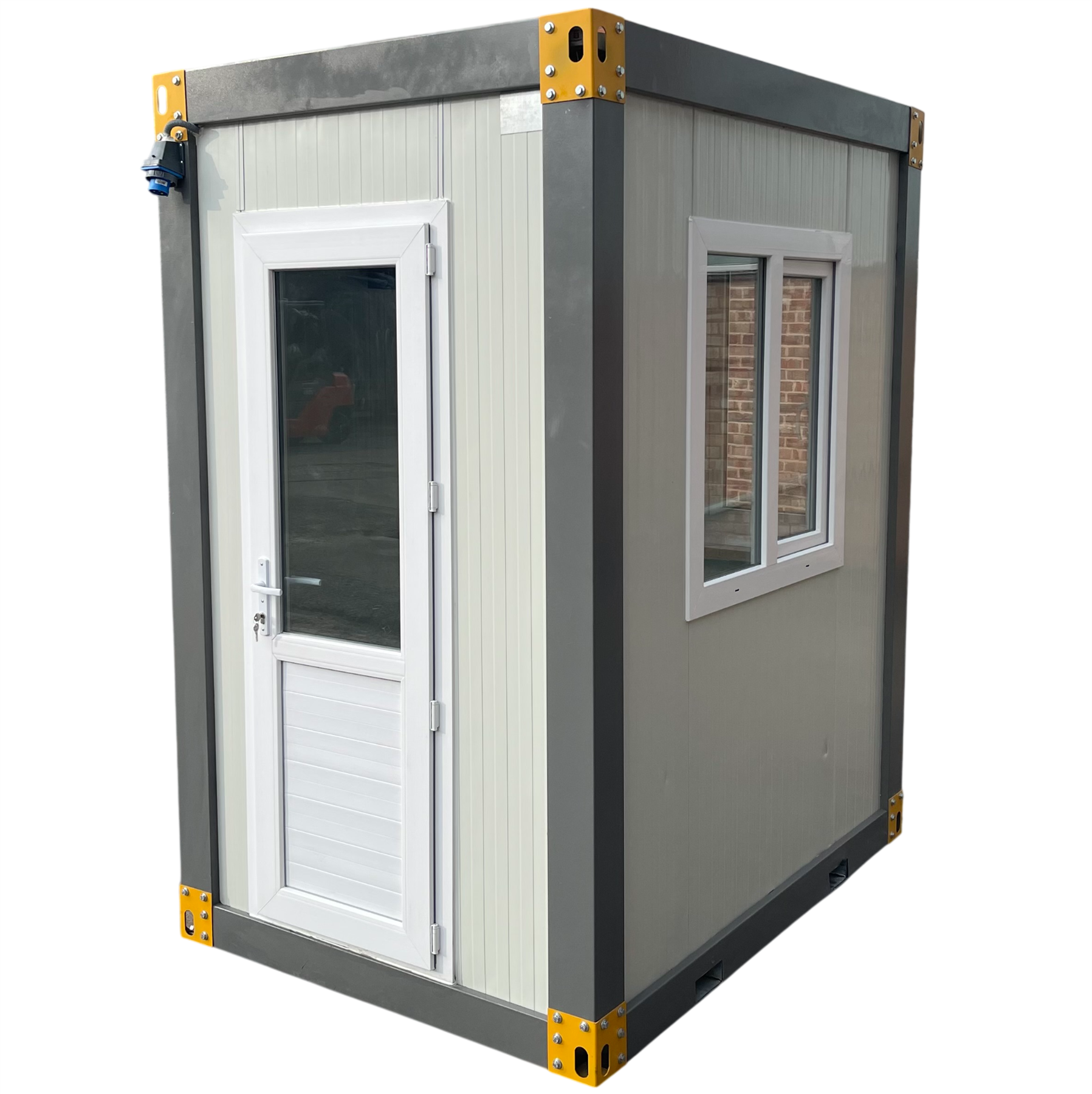
A portable cabin is engineered as a workspace from the first drawing. The walls are insulated sandwich panels — steel skins bonded to a rigid polyurethane core — so insulation isn't an add-on, it's the wall itself. Windows sit where a person working inside needs sightlines. The electrics are designed in, not chased in. The whole unit is built light enough to move with a forklift.
A converted container starts as a corrugated steel box built to stack nine-high on a cargo ship. Converting one means cutting openings into structural steel, welding in frames, then lining the inside to make it habitable. Done well it produces a very tough unit — but every workspace feature is retro-fitted into a structure designed for a completely different job.
Side-by-side comparison
The condensation problem nobody mentions
This is the difference that matters most through a British winter. A shipping container is a single skin of steel, and steel is an excellent conductor of cold. When warm, damp air inside — from a heater, a kettle, or simply a person breathing — meets that cold steel, it condenses. Unlined containers drip. That's why serious container conversions add insulation lining, anti-condensation coatings or both, and why cheap ones develop damp paperwork and mouldy corners by February.
Insulated panel cabins don't have this problem to solve, because there's no cold single skin for moisture to find. The internal wall surface stays close to room temperature, the heater's output stays in the room instead of leaking through steel, and running costs stay lower. If people will spend full shifts inside the unit, this single factor should weigh heavily.
From our range
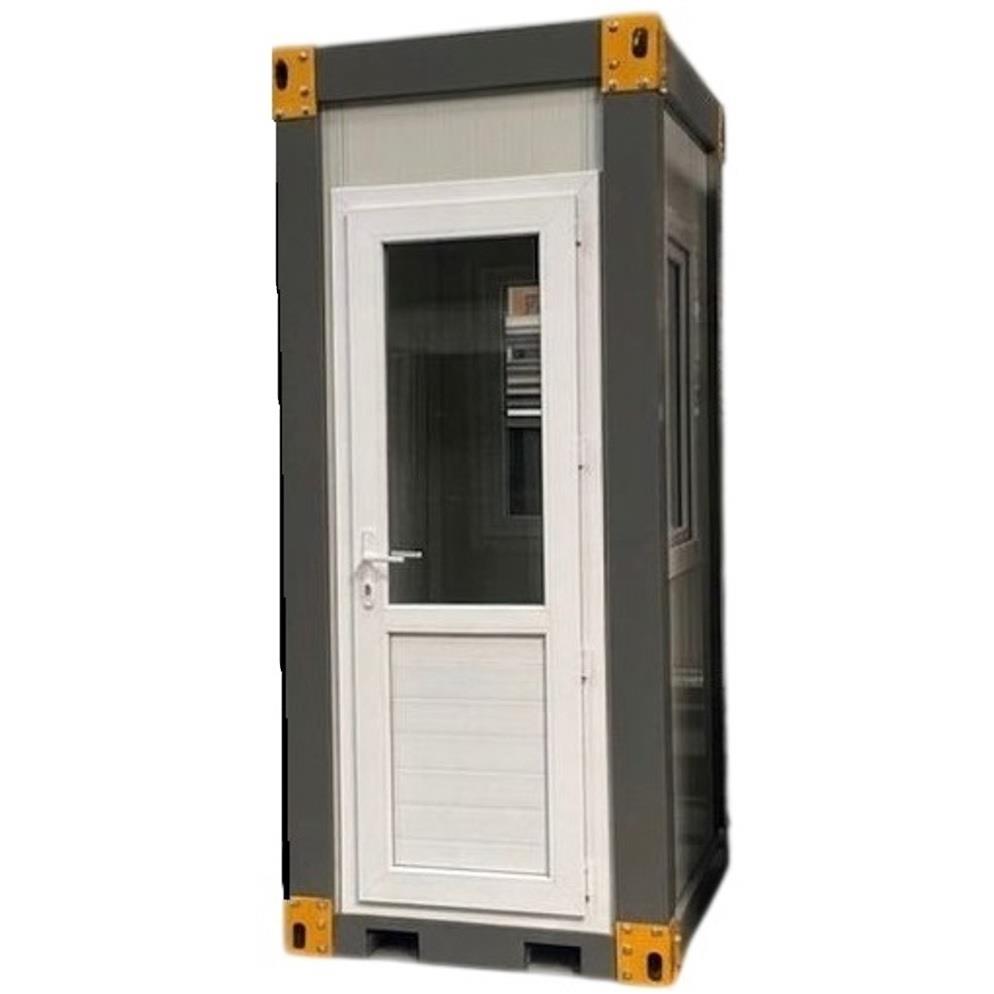
110x130cm Portable Cabin — £1,999.99 ex VAT
Everything this article describes, in stock: 40mm insulated panels, pre-wired electrics, heater included, light enough for a forklift. In our Leicester warehouse and ready for fast UK delivery.
View this cabinWeight, transport and where you can put it
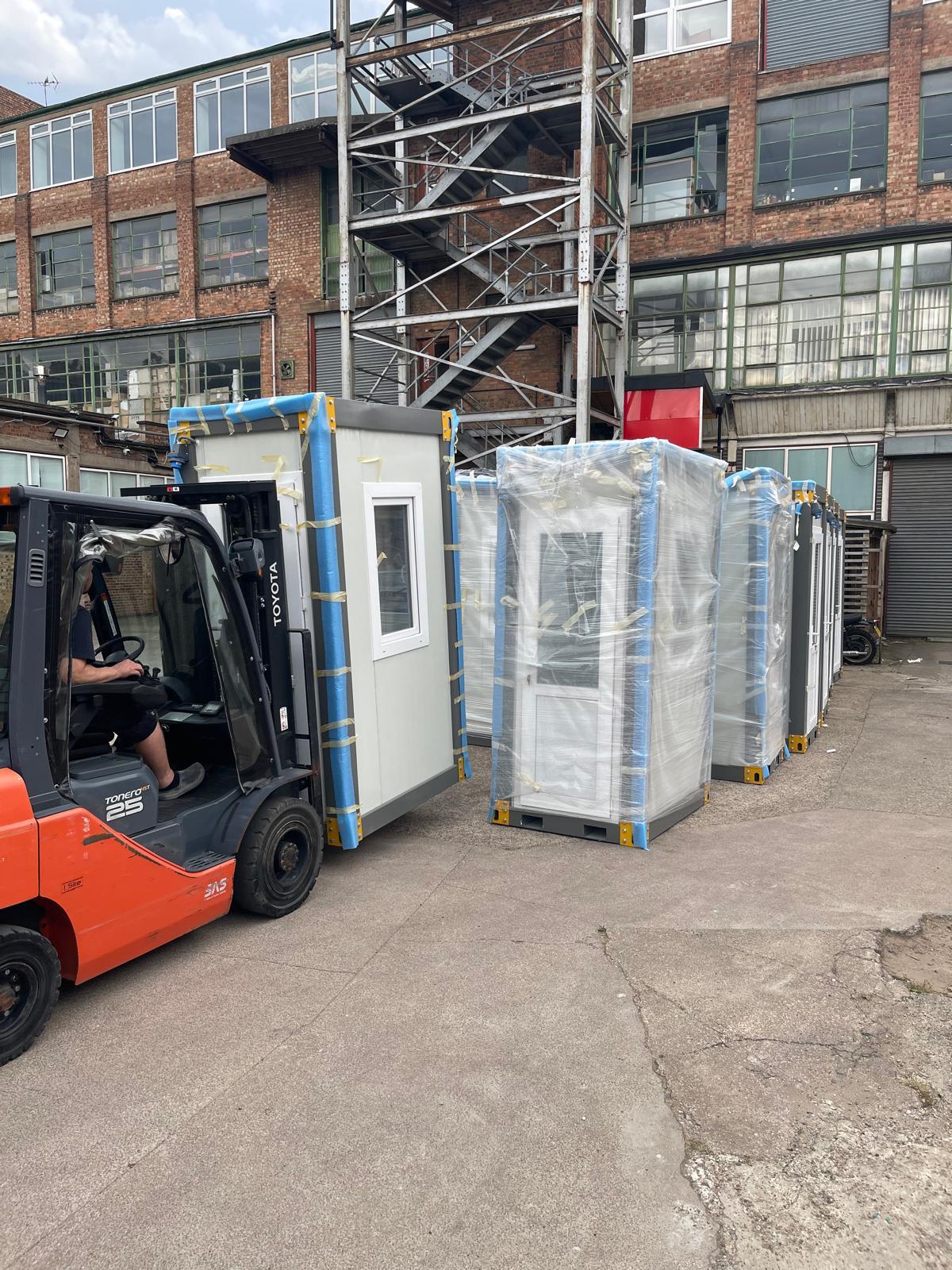
An empty 10ft container weighs well over a tonne; a 20ft unit more than two. Moving one usually means a HIAB lorry or crane, a driver who can position it, and ground that can take the load. Our compact cabins weigh from roughly 300kg to about 495kg — any site forklift or pallet truck arrangement can shift one, and it can sit on ordinary tarmac or paving without a second thought.
Size flexibility matters too. Containers come in shipping sizes, because that's what they are. Purpose-built cabins come in workspace sizes — from a 1.1m × 1.3m kiosk that fits a single parking bay upward. If your position is a barrier, a kerbside or a gate, a container simply may not fit where the work is.
When a converted container is genuinely the better choice
An honest comparison cuts both ways. If you need unattended, high-security storage on a remote or high-risk site — tools, plant, materials left overnight where theft is a real threat — the container's weldable, near-impenetrable steel shell is the right tool, and no panel cabin matches it for brute resistance. The same is true if you need units stacked two-high, or a structure that will be craned between rough sites for a decade with zero sympathy.
But those are storage and heavy-plant jobs. If the unit's purpose is a person working inside it — taking payments, checking vehicles in, watching a gate, doing paperwork — you're buying a workspace, and a structure designed as one from the start does that job better, for less.
The bottom line
Choose a converted container when security of contents is the whole job. Choose a purpose-built portable cabin when a human being is the contents. Our insulated cabins start at £1,999.99 ex VAT, arrive pre-wired with heating, lighting and sockets, and can be working the day they're delivered — no lining, no retro-fit, no drips.
Purpose-built, not a cut-up container
See our range of compact insulated portable cabins — in stock, pre-wired and delivered fully assembled anywhere in the UK.